Tuesday, 23 June 2015

Take your "PICK"

The choice of the right guitar pick can enhance the quality of your tone and improve articulation and clarity in chords, solos, riffs and single note melodies. Many students make their choice of picks on which ever is the most easy and convenient to use: which usually is a thin pick. A thin pick is generally the worst for tone reproduction, dynamics, and musicality. My advice for my students is to move to thicker pick as soon as possible to help grow their tone alongside their technique.

A good example from a different discipline is that of the microwave oven. I know of no chef who would use a microwave oven to cook fine food because the end result would be culinarily unsatisfying and universally frowned upon by his peers. A chef could use a microwave for certain uncritical and minor cooking events but would ultimately keep his or her's keen eye on the making of quality food using instruments that enhance flavour as opposed to 'zapping' the soul out of the food.


Now, the general modern household on the other hand uses the microwave oven for quick and convenient heating and cooking of "food" and "food-like" substances but... it's usually means convenience over quality and a quick fix as opposed to a satisfying event. Let's exit that mind-space for the sake of our guitar playing as an art as well as the longevity of our pursuit of beauty and goodness in music.

Back to guitar picks...

So, if we hear (and we can) that tone, clarity, and dynamics are all better when we change from a thin pick to a medium or heavy pick, we should plan to inch towards that goal in even the early stages of our guitar playing. By doing this we will soon realize that it's all about developing the touch within our hands and fingers that will help add that professional tone we are missing.

So, if we wouldn't hit a real nail with a toy hammer then we
shouldn't hit a real string with a toy (thin) pick.
Keep your tone the best it can be with a 'medium' to 'heavy'
pick and enjoy the pure gourmet tone.


Saturday, 6 June 2015

'AMP' or 'NO-AMP'?

A Big Rig: Nice if you have roadies
Small Rig: Can work in most situations


The move towards smaller guitar rigs has gained much momentum in the last few years. I personally use a small pedalboard and an amp simulator for my main guitar rig; so everything I need for a gig fits in my hard-shell guitar case or at most a guitar gig bag and a small duffle bag. I have in the past spent most of my life as a guitarist carrying around amp-heads, racks, pedalboards, guitars and cabinets, but I now welcome the change that my wallet, my back, and my ears thank me for. My change to a less expensive, smaller, and less ear-splitting rig that has worked extremely well in every situation from studio to stage.

I will breakdown the metamorphosis of my change to a small rig. In my time in the studios, touring, and jamming at home I have done many A/B comparisons (sometimes out of necessity) with different guitar rig combinations and I've often experienced very little loss of quality by using amp simulators either in software, rack or stomp box form. I have also taken tips from other players I have met along the way that get big tone out of small rigs.

The results:

LIVE: With the added baggage costs, and wear and tear on amps when I fly I usually just bring my guitar, a Line6 Pod and some assorted pedals. The promoter of the concert will usually rent and supply an amp for me which can be anything from a nice surprise to a nightmare. The results with the amp simulator have been consistency of tone, a nice low stage volume,  and added sound control for the front of house engineer. Sometimes I end up using the rented amp for a personal monitor but my main tone will be generated by pedals and the Line 6 pod.

STUDIO: The studio is very different from the live or touring situation because I do most of my work at home, where I don't necessarily have to lug around the gear. I can set things up and keep it ready to go at a flick of a couple of switches. In my studio I generally use the small rig out of the economic realities of a shrinking music business and a trend towards smaller lower budget productions. The session scene for the majority of players right now does not support having the big and crazy rigs of the past and small rigs are being used more effectively these days as a viable option to keep quality high on a budget.

The Verdict:

In my experience, portable rigs can replace big rigs in most studio or live situations. The quality is definitely comparable and is closing the gap quickly. For the added benefits to your budget, saving your hearing, and being easier to carry around I would recommend trying a small amp modeller or preamp with some assorted pedals in every situation from jamming at home to playing concerts.

Sunday, 17 May 2015

Staying Connected - Cables and Connections

Every electric guitar player has experienced his or her fair share of cheap and easily broken down guitar cables. No matter how many times we're reminded that, "we get what we pay for", we like sheep, head to that same discount bin of 'soon to be useless' cables at our local music store.

So, many many years ago I decided to stop the cycle of 'waste and frustration' by purchasing professional quality cables for every connection in my guitar rig, home studio and home theatre. The result was happily true to the labelled 'lifetime warranty' on the majority of professional cable packages. In 30 years of plugging in and out I have only had one cable issue that was immediately remedied by the fine folks at Fender. So the lesson for the day is:
              
              Don't buy cheap cables!

Here's a list some brands that you can look for quality cable that will last and produce good overall tone reproduction. Planet Waves, Monster, George L's, Spectraflex, Elixir, and Whirlwind.

Free yourself of the worries of cable problems and embrace the high fidelity of professional quality cables and connectors... and always remember:

              Don't buy cheap cables!

Monday, 4 May 2015

Are Guitar Pedals Too Expensive?

'
When you look at the price of guitar effects pedals these days ranging from $150 to $550, putting together even a modest pedal board with a few pedals might seem too steep for your budget. How can these tiny little metal boxes filled with tiny circuit boards and a few dangling wires hit my wallet so hard? My opinion, for what it's worth, is that for the most part putting together a padalboard of any size is much cheaper than the rigs of the near and distant past. I do admit that many pedal companies prices are too high; mostly due to the "hype" of the particular pedal or the "trendiness" of the particular company name on the pedal, but you can get a great rig happening for a fraction of the cost of rigs in the 1980's or 90's.

A Comparison worth Consideration

NOW                                                               
    • $300  Strymon Blue Sky Reverb                              
    • $450  Strymon Timeline Delay                             
    • $450  Strymon Mobius Modulation                         
    • $400  Analogman King of Tone Overdrive        
    • $125  Xotic EP boost                                        
    • $200  Wampler Pinnacle Distortion                  
    • $200  Wampler EGO Compressor                      
    • $200  Voodoo Labs Pedal Power 2                     
    • $200  Pedatrain Pedalboard                                  
THEN
    • $2500  T.C. Electronics 2290 Delay                     
    • $1200  T.C. Electronics 1122 Chorus                                       
    • $2000  Lexicon PCM 70 Reverb                            
    • $1000  Yamaha SPX 90 multi-effects                    
    • $500    DBX 160 Compressor                                 
    • $150    ProCo Rat Distortion                                   
    • $100    ADA Midi Switcher                                      
    • $200    Furman Power Conditioner                       
    • $500    Anvil Rack for effects
This comparison between the 'NOW' state of the art pedal board with a price tag of $2,525 and the THEN' rack of effects with a price tag of $8,150 is a fair estimate in my experience as a professional player using gear in both eras of the music industry. One rack effect of the 80's/90's can exceed the entire price of your whole boutique pedalboard. This example breaks down a little with the thought that you could have used a pedalboard in the eighties and rack effects now but it's still a reminder to me that one can get great gear these days at a very reasonable price, even if you buy the top of the line stuff.


Wednesday, 22 April 2015

S.H.A.P.E. Your Guitar Playing

Spirit
We experience music as spiritual or metaphysical element
 that transcends the mere natural world. It's a common gift to all
mankind of uncommon power on our souls.
Heart
Our hearts are pulled towards enjoyment and participation
 of making music as recreation or vocation. 
Ability
We take practical steps to improve, expand and strengthen
our abilities by study, practice and perseverance.
Personality
A musical identity, style or sound develops.
Emotion
An emotive and dynamically quality
add vitality to the musical performance. 

Many guitar players and students never seem to S.H.A.P.E. their playing into something
 unique, special or dynamic. They remain happy with having what I would call a "S.H.A." 
and stopping at the ability part of the "S.H.A.P.E." an acronym" and never finding a style 
or dynamic to their playing. A culinary example of this would be like forgetting to add the yeast
to the dough - everything then tends to come out flat. 

To journey through music being a beautiful gift, (spirit) to dreaming of playing, (heart) and then on to participation (ability) is a good thing, but music is a dynamic and subtle language in need of added elements to communicate the spectrum of sounds and rhythms necessary for a meaningful interaction.

In plainer words: we love bands like U2 for their unique style and sound (personality) and the way their concerts excite the listener in a screaming, fist-pumping, dancing state of euphoria (emotion).

The solution for a musician is to go beyond a S.H.A. by adding some personality and emotive qualities to what they do on their instruments. You can start this by trying to add some unique or quirky qualities you see in some of your favourite artists, and by emoting some of the lyrical or dynamic content of the song in the way you strike or pluck the strings; bending your thoughts toward these things as you play will alter the music even without feeling much of a tangible difference. 


Friday, 3 April 2015

5 Tips for Beginner Guitar Players

One: "Do or Do Not; there is no TRY" (Quote - Yoda)

For Jedi warriors and guitar players alike this is an essential idea throughout your entire life as you fight the forces of the dark side or just the forces of your own lack of confidence. You will learn most of what you need to be a player just in the simple act of doing.

Two: "To climb steep hills requires a slow pace at first" (Quote - William Shakespeare)

Patience with persistence is the right combination for this essential idea, and whether it's 'To be, or not to be" will depend on just taking things as they come. Each individual connects the dots at different times, and rushing and cutting corners will not get you to your destination any quicker.

Three: "The main thing to do is relax and let your talent do the work" (Quote - Charles Barkley)

Tension is always an obstacle to efficient motion and mental acuity, so relax and enjoy the process of becoming a guitarist and appreciate the gift of being able to play and make music.

Four: "Never lose a holy curiosity" (Quote - Albert Einstein)

Be curious in discovering things about music, sounds, different approaches to technique and the things that make great guitarist great. Be a curious student of the whole of music.

Five: "It's not having what you want but wanting what you have" (Quote - Sheryl Crow)

Enjoy the simplicity of making music. Just you and your guitar will create timeless moments that will be like 'vitamins' for the soul. Don't look outside the resources at hand for some sort of special inspiration or magical prescription for success. 

Tuesday, 17 March 2015

A Guitar Rig under $1000

Line 6 PodXT
Pedalboard
Putting together a guitar rig with a $1,000 to spend gives plenty of wiggle room for building a variety of sounds, enhancing performance possibilities, and mimicking the tones of your favourite players. It's still a very minimal amount to spend comparatively to gigging players in the local or international scene.  A typical experienced or pro player can have $5,000 to $100,000 tied up in guitars, amps, pedals and accessories, but you can still more than meet your needs for a $1,000. It's a good place to start.


Gibson les Paul Studio
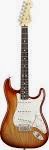
American
Fender Strat

If I, personally, had only $1,000 in my budget for a guitar rig and knowing what I know as long time player and the basic needs I have for the gigs I play, I would gravitate towards getting either a used American-Made Fender Stratocaster or a used Gibson Les Paul Studio for around $800 and add to it a used Line 6 Pod at approximately $125 and a planet waves cable at $40 and a Levi strap at $30.

Line 6 PodXT 


Most of my budget would go into the guitar portion of the rig            and the Line 6 Pod is a versatile multi-amp/multi-effect unit that will cover just   about any style and plug straight into a PA or another amp. Having a good, tonally rich professional guitar is definitely the most important part of any rig. If I have a great guitar, I can feel confident plugging into a tonne of different qualities of amps and pedals and achieving a good tone.

Whatever direction your shopping takes you try to keep the quality of components high and the quantity of parts to a minimum. Remember the guitar is the most important part, and the rest of your rig can start small and grow over time.